
Commercial Roof Repair
One failed curb, drain, lap, or pipe boot, rebuilt with matching material while the rest of the roof stays in service. Moisture readings around the leak show whether repair is enough.
Commercial roof repair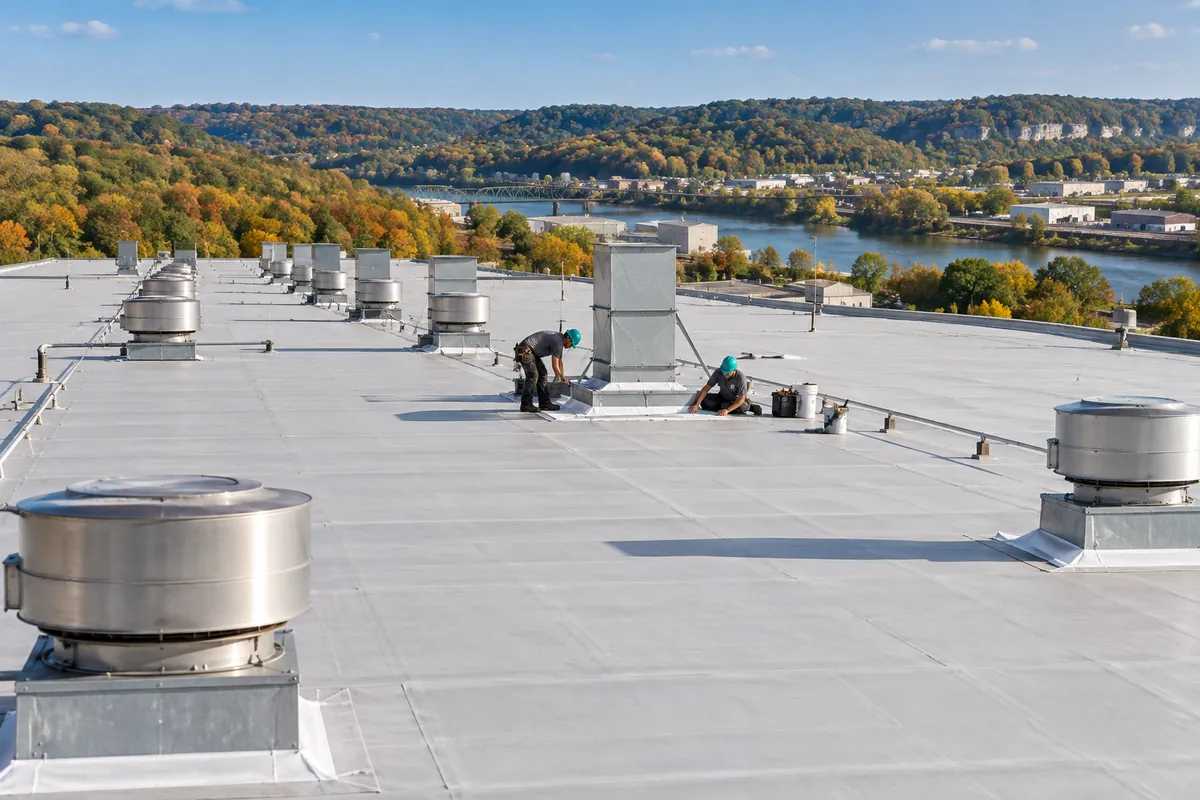
We offer commercial roofing services in Frankfort for repairs, full replacements, and new TPO, EPDM, flat, industrial, and metal roofs on business and farm buildings.
Each of our commercial roofing services in Frankfort starts with a roof walk. Pick the card closest to what your roof is doing.
One failed curb, drain, lap, or pipe boot, rebuilt with matching material while the rest of the roof stays in service. Moisture readings around the leak show whether repair is enough.
Commercial roof repair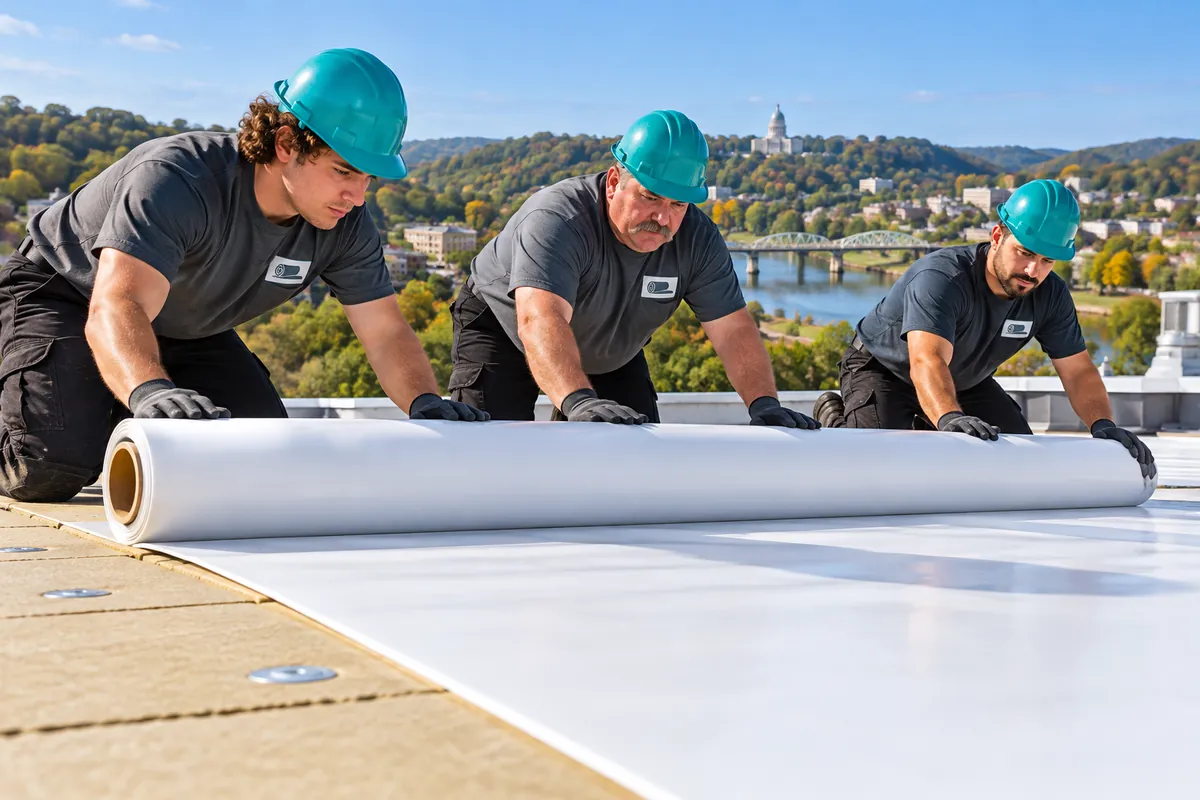
White sheets hot-air welded into one membrane over low-slope decks on warehouses, schools, and offices.
TPO roofing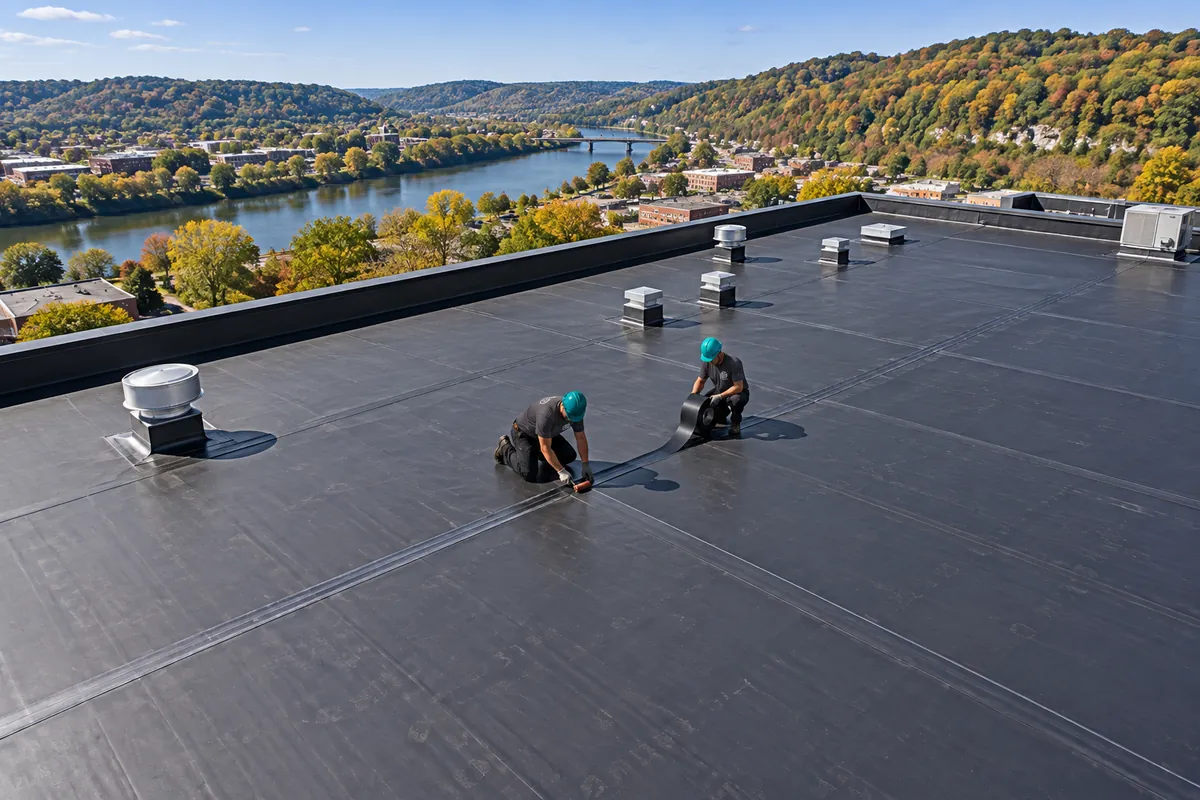
Black or white rubber in very wide rolls, with primed and taped laps and easy flashing around crowded penetrations.
EPDM roofing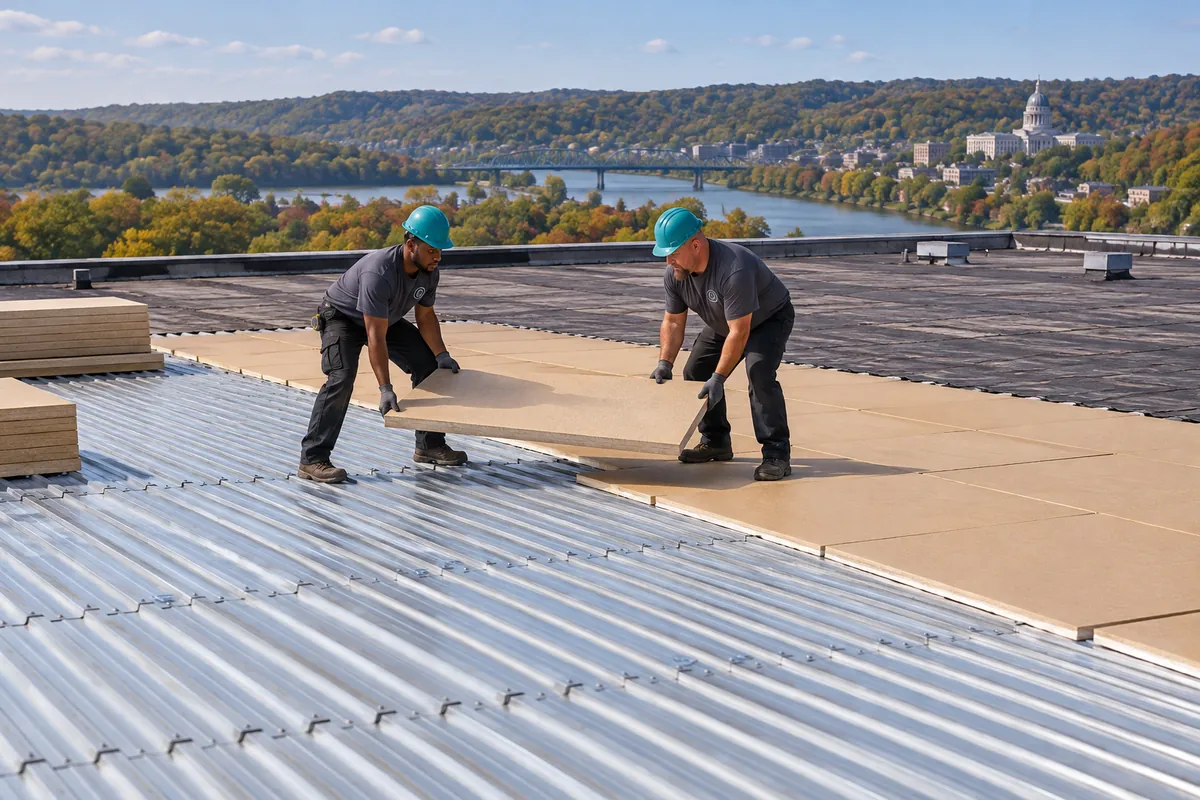
Low-slope rebuilds where tapered board, crickets, and lowered drain sumps end standing water under the new membrane.
Flat roofingPlant and warehouse roofs replaced in sections around shifts, with membranes chosen against the exhaust list and rails lifting heavy equipment off the sheet.
Industrial roofing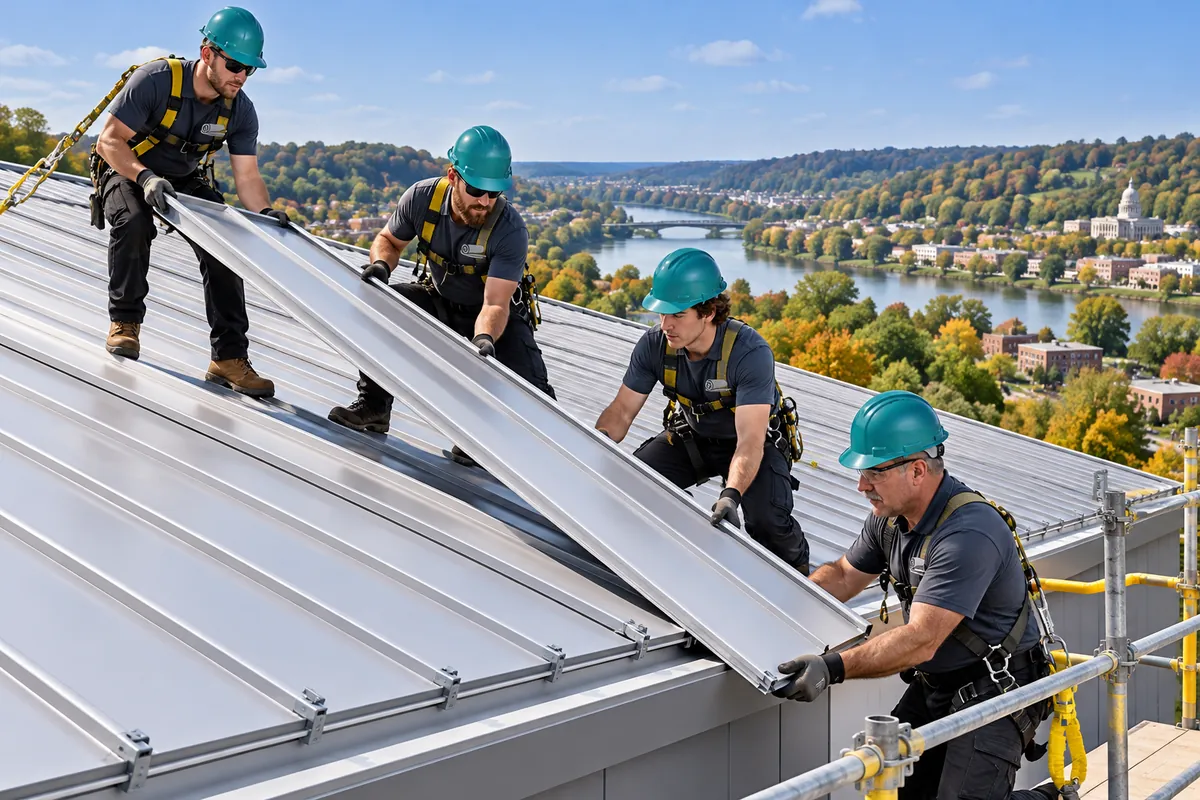
Standing seam and R-panel roofs, retrofit slopes over flat roofs, and repairs to screws, laps, and trim.
Commercial metal roofingCommercial roof tear-off vs recover in Kentucky comes down to wet insulation and how many roofs are already on the deck. Core cuts settle it.
Call and describe the roof and its leaks. The inspection answers that question with moisture readings and photos.
Slope, drain layout, rooftop equipment, and the work inside the building narrow most roofs to one or two systems.
| System | Usual Slope | Seams | Surface | Fits |
|---|---|---|---|---|
| TPO | Low slope | Hot-air welded | White, reflective | Cooled warehouses, offices, schools |
| EPDM | Low slope | Primer and seam tape | Black, or white | Heated shops, crowded layouts |
| PVC or KEE | Low slope | Hot-air welded | White; resists oils and fats | Restaurants, food and process plants |
| Modified bitumen | Low slope | Torched, cold adhesive, or self-adhered | Granulated cap sheet | Older buildings, heavy foot traffic |
| Standing seam metal | Pitched or low slope | Seamed or snap-lock ribs | Painted steel or aluminum | Offices, churches, retrofit slopes |
| R-panel metal | Pitched | Exposed screws at side laps | Painted steel | Shops, barns, storage |
Commercial roof replacement steps run in a fixed order so each layer goes on dry.
Core cuts and moisture readings map the wet areas, and we note drains, curbs, unit count, and edge metal before setting the scope.
Interior areas, air intakes, and parking below get protected, then old roofing comes off in sections sized to dry in before quitting time.
Damaged deck and fasteners get replaced, then insulation, tapered panels, cover board, and the membrane or metal panels go down.
Curbs, walls, drains, and penetrations get flashed, edge metal and gutters go on right after the field, and we walk the roof with you.
Answers on systems, code, cost, taxes, and keeping the building open.
Single-ply membranes such as TPO, EPDM, and PVC cover most low-slope commercial roofs, metal panels cover most pitched ones, and built-up or modified bitumen roofs still turn up on older buildings. Slope, drains, rooftop equipment, and the work inside narrow the choice to one or two systems.
The 2018 Kentucky Building Code, based on the 2015 International Building Code, per the Department of Housing, Buildings and Construction, with commercial energy rules from the 2012 IECC. Inspectors check fire classification, wind attachment, flashing height, drainage, and reroofing limits. Editions change, so we confirm the current one before design.
Square footage, tear-off and disposal, wet insulation and deck repair, insulation thickness and tapered design, each curb and penetration, linear feet of edge metal and gutters, and access all move the price. Labor and detail work often outweigh the membrane itself, so a busy roof costs more per square foot.
It can. IRS Publication 946 names roofs added to nonresidential buildings after they went into use as qualified improvements. For 2026 tax years the cap is $2,560,000, reduced once a business places more than $4,090,000 of property in service. Residential rentals are excluded. Your CPA decides, so invoices split tear-off, deck, insulation, membrane, and unit work.
Most do, because the work runs in sections that get sealed each day. Rooftop units shut down briefly at their curbs, air intakes get covered during adhesive work, docks and entries stay open on a shared schedule, and tenants get notice before work moves over their space.
Replacement is the time to fix how water leaves the roof: new drain bowls or retrofit inserts, tapered board and crickets toward outlets, overflow scuppers through parapets, larger gutters on metal roofs, and drain sumps that lower the membrane at each outlet.
Yes. Franklin County land goes to Franklin County Planning, Zoning and Building Codes, and parcels inside Frankfort city limits go to the city. Describe tear-off, deck replacement, new curbs, and edge metal when calling, since the county adopted new permit and review fees in January 2025.
Often. New insulation raises the roof surface, so units on short curbs get adapters that keep flashing at height. Gas lines and condensate drains get rerouted on supports, and HVAC and electrical changes carry their own permits. Units near the end of service are often replaced during the roof job to avoid lifting them twice.
Tell us what the roof is doing and what sits on it. We will walk it and recommend repair, recover, or tear-off.
Want a Call Back About Your Roof?
Leave a name and number, or call (502) 300-9613 now.