Cold or Dirty Weld Laps
- You See
- Seams that peel by hand or show a narrow weld bead.
- What It Means
- Heat, speed, wind, and dirt on the lap change weld quality. Test welds and probing catch weak spots.
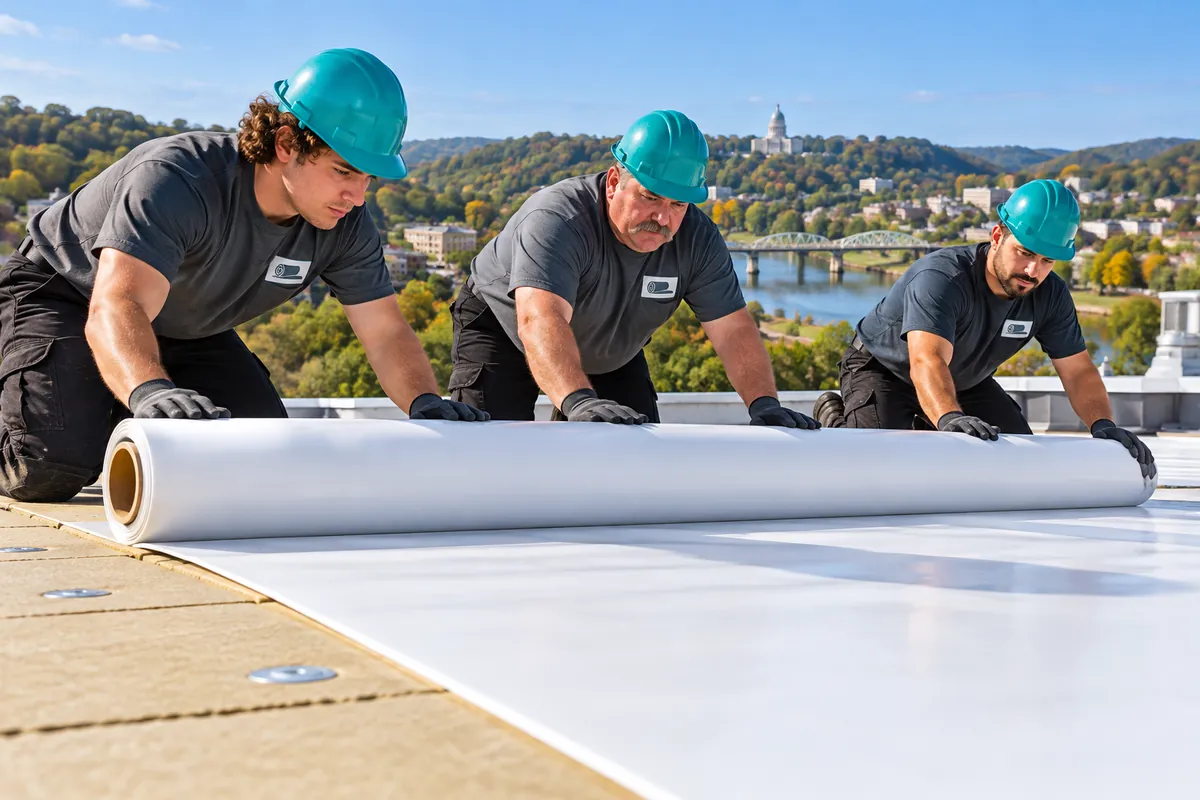
As a Frankfort TPO roofing contractor, we install white TPO membrane on low-slope warehouses, offices, schools, and plants, with every seam welded and probed.
TPO roof installation in Frankfort, KY works best on certain decks and buildings. Here is how a Frankfort TPO roofing contractor sorts them.
Most TPO trouble starts at details, so these conditions get checked on every roof before the new sheet goes down.
Mechanically attached vs fully adhered TPO is the main choice, set by the deck, wind exposure, and building use.
| Method | How It Holds | Fits | Watch For |
|---|---|---|---|
| Mechanically attached | Screws and plates hidden in the seam laps | Steel decks and large open roofs | Flutter in high wind |
| Fully adhered | Bonding adhesive across the whole sheet | Wood or concrete decks, windy edges, odd shapes | Adhesive temperature limits in cold |
| Induction welded | Plates under the sheet heated through the membrane | Roofs needing fewer laps and a smooth look | Special equipment and plate spacing |
| Ballasted | Stone or pavers over a loose-laid sheet | Structures rated for the extra weight | Wind scour and harder leak access |
Owners usually come to TPO from a patched, ponding roof. Here is what changes when the new sheet goes on.
Before TPO
After TPO
Call and tell us the roof size and what runs on it. We will walk it and explain where a white TPO sheet fits.
The order of work keeps each section dry and each seam tested before the crew leaves.
Core cuts and moisture readings map wet insulation, and we note the deck type, drain heights, curb count, and parapet details.
Polyiso boards, tapered where water ponds, go down with a cover board on top to shield the membrane from foot traffic and hail.
An automatic hot-air welder fuses the laps. Test welds on scrap start each day, and every cooled seam gets probed for gaps.
Curbs, pipes, drains, and walls get welded flashing pieces, then edge metal and walkway pads go on before the final walk.
Some roofs fit a neighboring system better than TPO. These pages explain when.
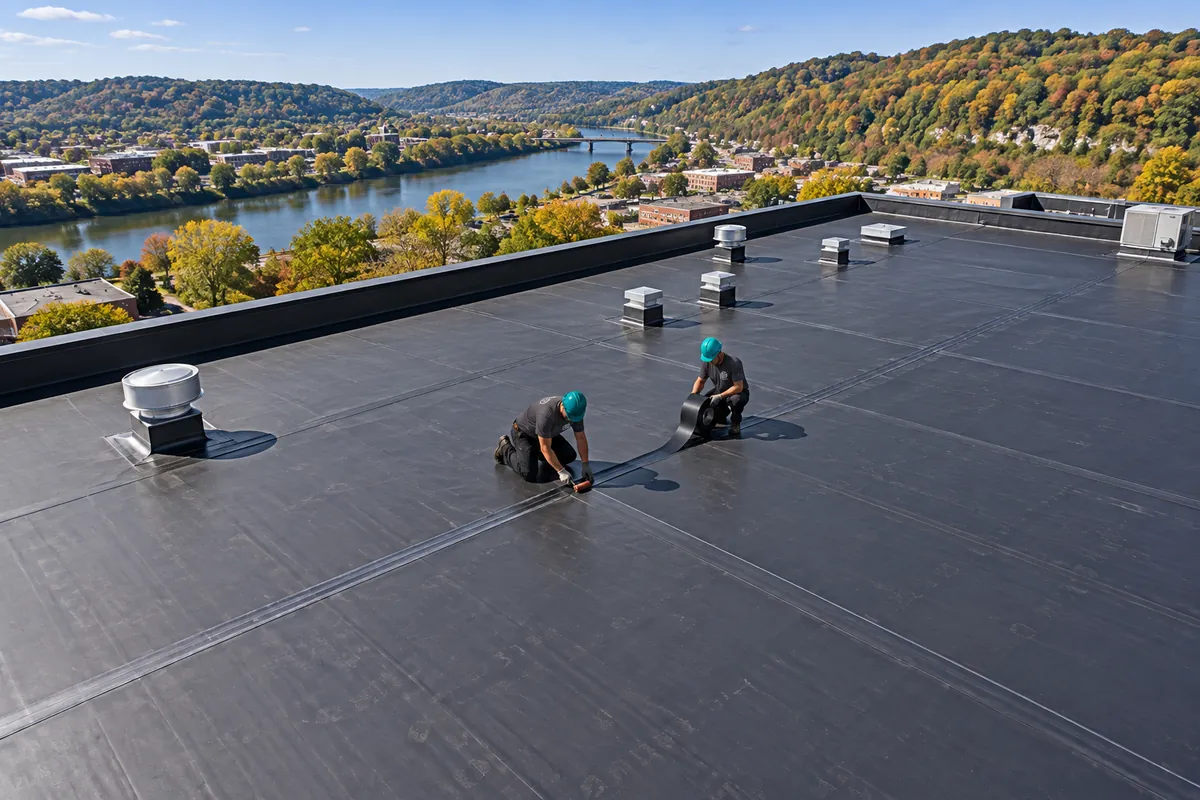
Roofs crowded with pipes and vents, or already covered in rubber, often fit EPDM better than TPO.
EPDM Roofing in Frankfort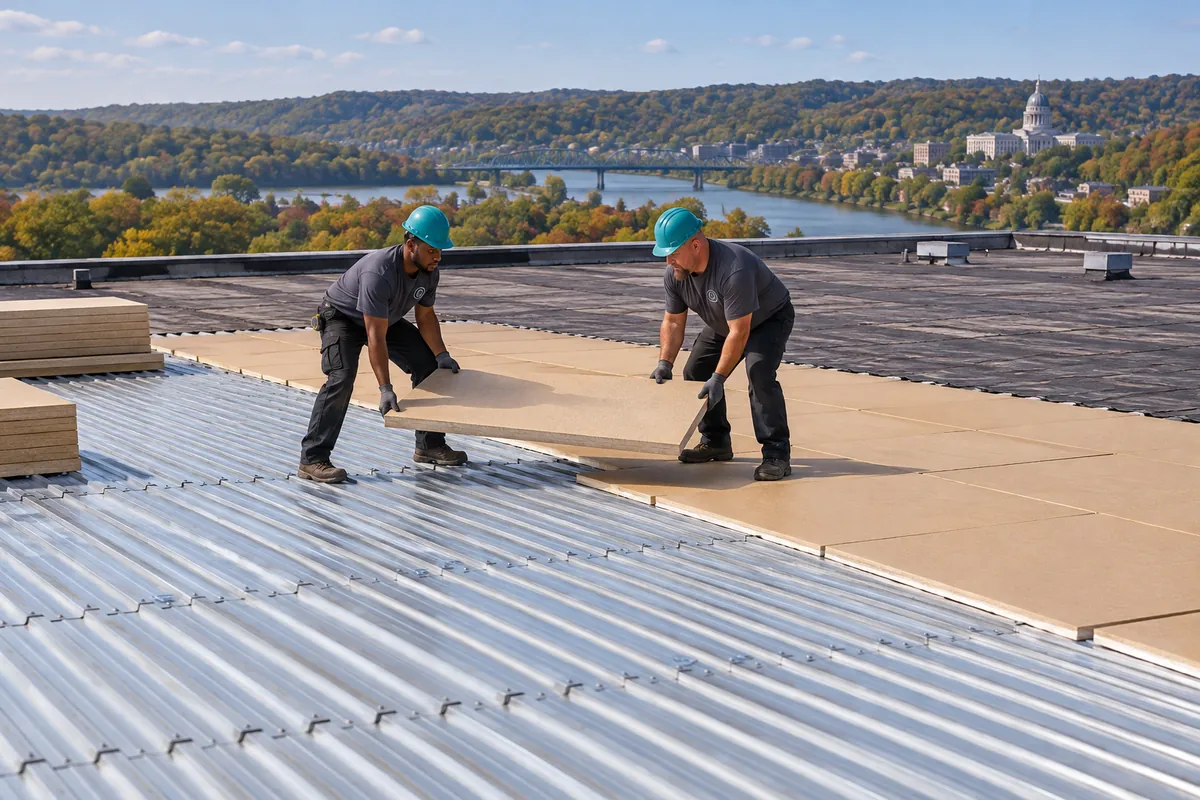
Ponding under any membrane gets fixed with tapered board and reset drains before the new sheet goes down.
Flat Roofing in Frankfort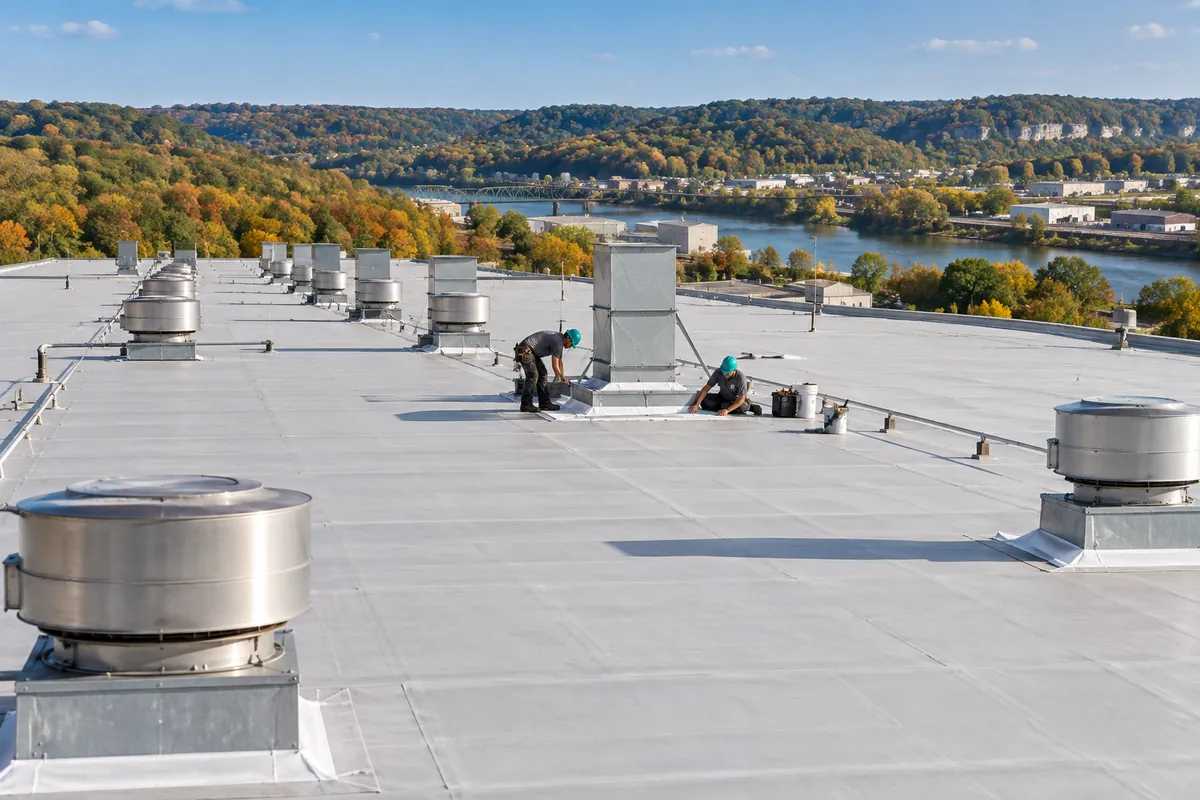
Plant roofs with grease or chemical exhaust need a membrane checked against the exhaust list.
Industrial Roofing in FrankfortAnswers drawn from the questions owners ask before a TPO roof goes on.
An automatic hot-air welder melts the two sheets together along each lap, and a hand welder and roller handle curbs and corners. Crews run test welds on scrap each morning and after weather changes, peel samples to confirm the sheet tears before the weld, probe every seam once it cools, and weld a cover over any gap.
Deck type, wind exposure, and building use decide it. Screws and plates in the laps suit steel decks and large open roofs. Bonding adhesive across the sheet suits wood or concrete decks, irregular roofs, and windy edges, with cold-weather adhesive limits to plan around. Corners and perimeters get tighter fastening either way.
Thicker sheets resist foot traffic, hail, and long sun exposure better. In central Kentucky, 60 mil is a common middle choice for offices, retail, and warehouses, while 80 mil suits busy roofs with many units or hail exposure. A cover board under the sheet adds puncture resistance too.
Each opening gets its own welded piece. Membrane runs up every curb side and caps under the unit flange or counterflashing, pipes get prefabricated boots with stainless clamps, drains get the sheet locked under the clamping ring, and parapets end under coping or a termination bar. Walkway pads protect the path to each unit.
Low-slope warehouses, offices, retail strips, schools, plants, and distribution buildings. Owners pick it for the white surface, welded seams, light weight over steel decks, and wide rolls. The Cool Roof Rating Council lists rated reflectance values, so a specific product can be checked before ordering.
Send the roof size and deck type, or call. We will walk the roof and price a welded TPO system for it.
Want a Call Back About Your Roof?
Leave a name and number, or call (502) 300-9613 now.