Fishmouths at Older Laps
- You See
- Small open wrinkles at lap edges and T-joints.
- What It Means
- Liquid splice adhesive has let go. Priming and a new cover strip seal the lap.
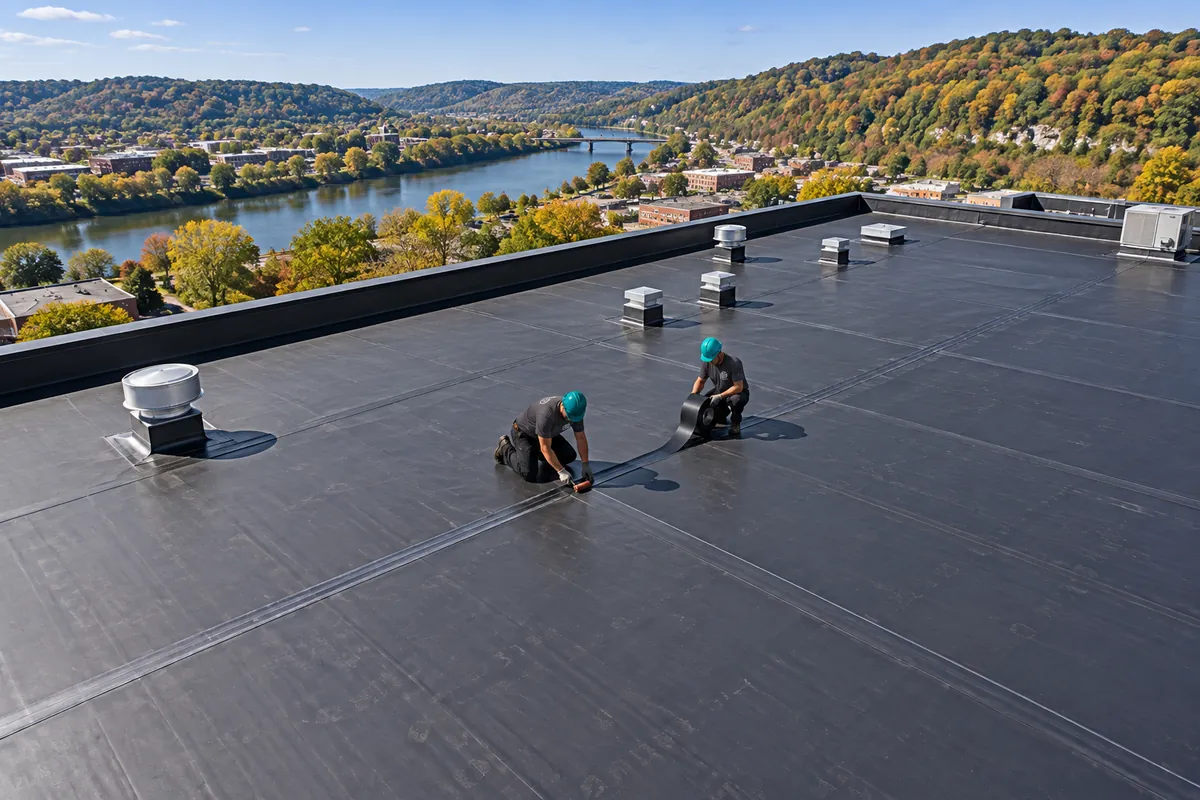
As a Frankfort EPDM roofing contractor, we install and re-roof with black or white rubber membrane on shops, heated plants, and storage buildings.
EPDM rubber roof work in Frankfort, KY suits some roofs far better than others. A Frankfort EPDM roofing contractor looks at layout, heat, and exhaust first.
These are the conditions that wear out an EPDM roof, and what each one means for the next sheet.
EPDM seam tape vs splice adhesive is the biggest change from older rubber roofs, along with the color of the sheet.
| Choice | How It Works | Where It Fits | Note |
|---|---|---|---|
| Seam tape | Primer on both sheets, tape rolled into the lap | Standard on new installs | Even bond line from end to end |
| Cover strip | Tape strip laid over the lap edge | Factory seams and T-joints | Also used to fix older laps |
| Black EPDM | Absorbs sun, hides dirt | Storage, shops, heated plants | Lower material cost |
| White EPDM | Reflects sun, shows streaks | Offices, retail, cooled warehouses | Lighter load on rooftop units |
Moving from a worn rubber roof to a new sheet changes these details.
Before New EPDM
After New EPDM
Call and describe what you see at the parapets and laps. We will check the base tie-ins on the first visit.
Clean, dry laps decide how well a rubber roof holds, so the work order protects them.
Moisture readings and core cuts find wet board, and we check old laps, base tie-ins, drains, and exhaust fans before planning.
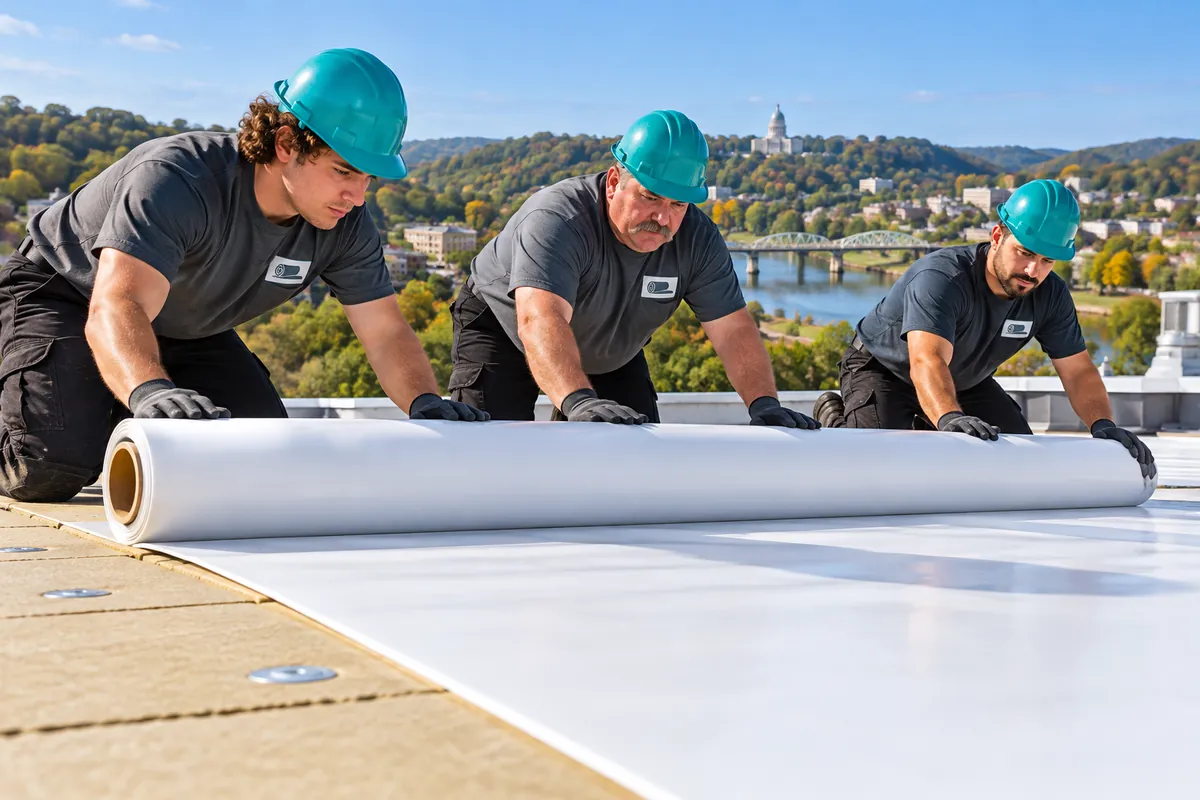
Damaged deck gets repaired, then insulation and cover board go down. Sheets are unrolled and left to relax flat before seaming.
Primer goes on both faces, tape is set in the lap, and a silicone hand roller pushes out air toward the edge.
Uncured rubber shapes corners, termination bars hold parapet runs under coping, and drains get the sheet clamped into the bowl.
When rubber is the wrong fit, one of these usually is.
Cooled offices and warehouses that want a white, welded surface usually land on TPO.
TPO Roofing in Frankfort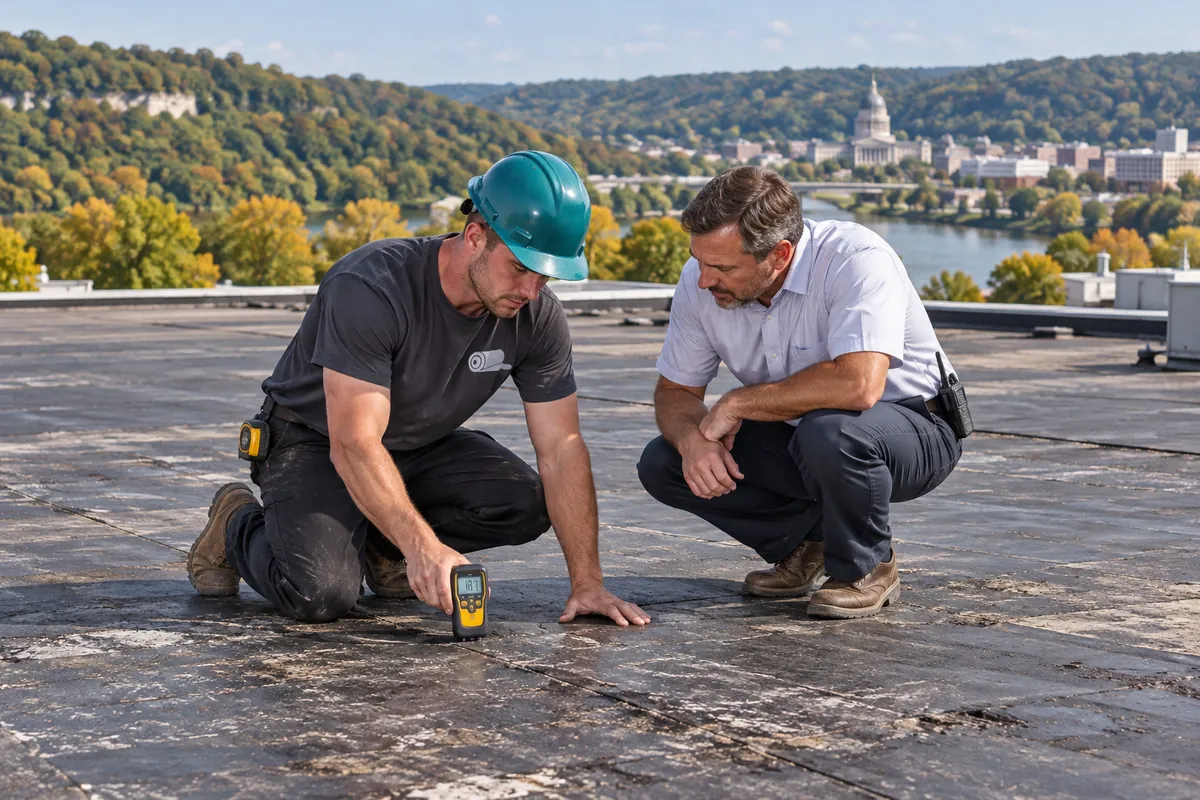
A rubber roof with one failed lap or boot gets repaired with primer, tape, and matching EPDM.
Commercial Roof Repair in Frankfort
Water that sits on rubber after storms calls for a slope plan along with the new membrane.
Flat Roofing in FrankfortAnswers to the rubber roof questions owners ask most.
It turns on what happens inside. Black EPDM suits heated buildings and storage, costs less, and hides dirt. White EPDM suits buildings that run air conditioning hard, because it stays cooler in summer, though it shows streaks. Over a cooled office, a white sheet lightens the load on rooftop units through long summer afternoons.
Modern EPDM seams use primer and pressure-sensitive tape, which replaced the brushed contact cement on many older roofs. Tape gives an even bond line. Cover strips seal factory seams and T-joints, and lap sealant adds protection at exposed edges. Laps showing fishmouths get primed and stripped.
Membrane runs up the parapet face and gets secured with a termination bar under metal coping. Through-wall scuppers get a lined metal sleeve with stripping over the flange. Corners use uncured rubber stretched to shape, and drains get the sheet clamped under the ring.
Soft, swollen rubber around kitchen or process exhaust fans. Grease and oil soften the sheet, so restaurants and food plants need a different membrane near the vents or added protection such as grease boxes. Walkway pads, clear drain strainers, and spring and fall seam checks protect the rest of the roof.
On roofs with complex layouts and many penetrations, where rubber flashing bends easily; on buildings already roofed with EPDM; on heated spaces; and on cold-weather jobs, since the sheet stays flexible. Very wide sheets also mean fewer seams on a large roof.
Often, yes. Rubber stays flexible in the cold, and mechanically fastened EPDM keeps going on chilly days. Primers and adhesives have minimum temperatures on the maker data sheet, so they stay warm on the job until use, and each day opens only as much roof as the crew can seal before dark.
Tell us about the building and its exhaust fans. We will walk the roof and price a rubber system that fits it.
Want a Call Back About Your Roof?
Leave a name and number, or call (502) 300-9613 now.